
- Melaka Sentral
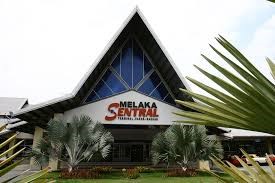
Melaka Sentral is the state bus station. This is where you will arrive if you’re coming from out of state. It’s also a transportation hub. You’ll find public buses and taxis here. All buses stop in Melaka Sentral as their last stop.
In Melaka, taxi services are also advisable. You can take the taxi from the Melaka Sentral, and the price is around RM20+ to Melaka Red House during the daytime. Metered taxis are the norm, and haggling is prohibited in all metered taxis. However, if your driver does not turn on the meter immediately, insist on his doing so. RM15- RM20 should be enough to bring you around town unless you’re going somewhere far (more than 20 km). The taxi from Melaka Sentral bus station to Jonker Walk is around RM12 at 7pm.
A cab will take you anywhere you want to go for a fee. You can hail a taxi where ever you are from the road, as they pass by many routes. Do try to bargain your fare; although they are required by law to follow a meter, most do not so you can set the amount before boarding.
- The trishaw
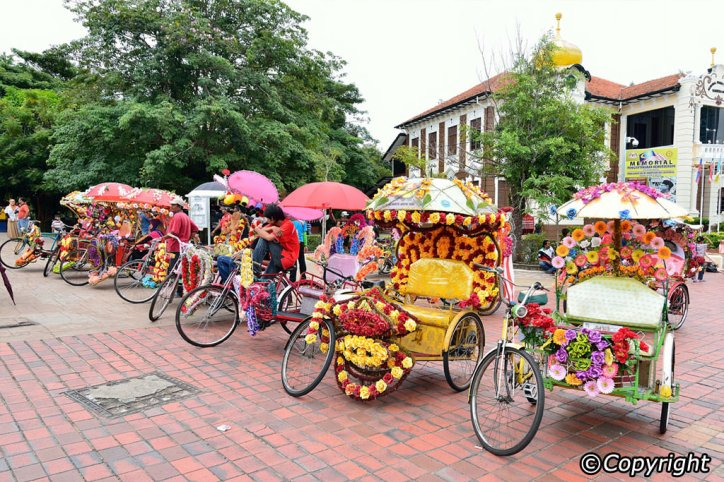
The Trishaw (rickshaw) system is mostly used by tourists around the historical tourist spots in town. In no way is it dependable for efficient transportation or fast travel. Obviously, the trishaw is the most expensive means of transportation in Melaka. But it’s a good experience if you want to try it out for fun. For the price will be MYR 45+ per hour per trishaw. Here, haggling is advised.
A trishaw ride is reminiscent of the days gone by. It is a thoroughly enjoyable way to get around Malacca along with the knowledgeable tour guide cum trishaw rider. The trishaw pullers will take you to all the major tourist sites; they know them all like the back of their own hands. If you decide that the trishaw is the thing for you, then it would be helpful for you to know that you will be able to get them at the Dutch Square and outside the Mahkota Parade Shopping Centre.
- ThePanorama Buses (public buses)
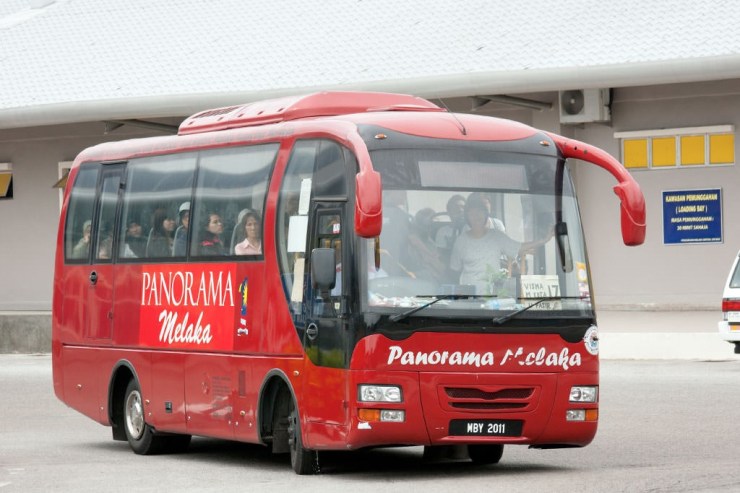
The Panorama Buses (public buses) are reasonably cheap. Since 2013, all the old buses were put off the road and replaced with new automated buses equipped with good seating and air conditioning. The public bus system also underwent major revamps, with all routes were taken over by the state subsidiary Panorama Buses. Beginning in 2014, the red buses will be replaced by new green electric buses which are expected to reduce pollution and increase efficiency. Since most people just use these for short distance travel, there are no passes / 1-day, etc. You pay per ride. On the official website, you’ll find the comprehensive list of bus routes as well as other useful information.
For any other information, just call this number +606-2826466
As Malacca is a small place, taking the bus is an easy way of getting around. There aren’t as many jams as big cities like Kuala Lumpur and Georgetown. Stations are available at designated spots around town but do keep coins for the ticket machines as they do not return change.
- Melaka Duck tours
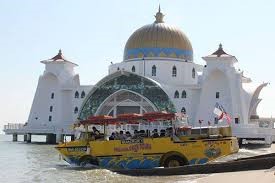
Melaka Duck Tours which have the most technologically advanced fleet of Duck in the world. Melaka Duck Tours is the first and only amphibious vessel which could travel on both land and sea in Malaysia. The tourist can experience what Melaka has to offer on land and sea by touring the city with these amphibious vehicles.
- Melaka river cruise
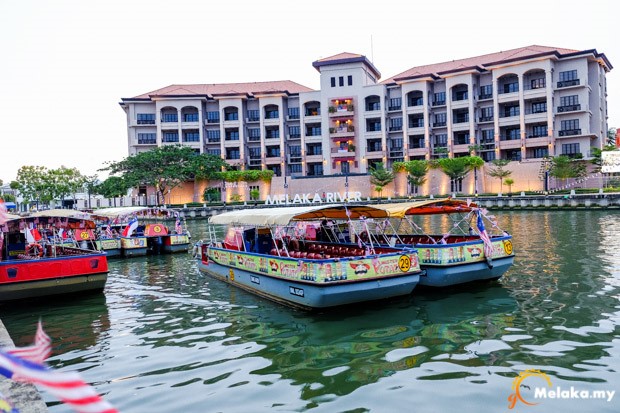
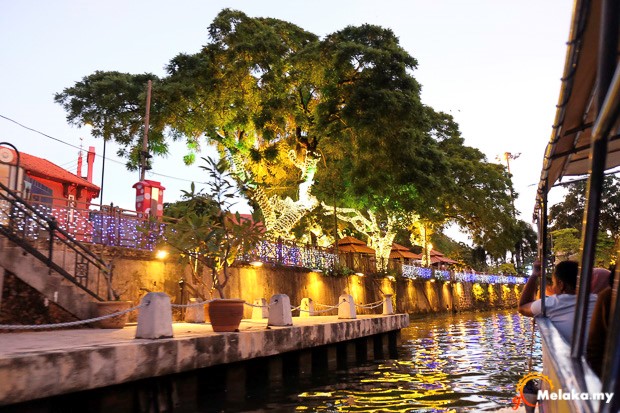
Melaka River tour should be one of the first things to do in Melaka, so you can get an overview of the area and see which restaurant suits you best. This state has done a great job making a nice river walk a la San Antonio. It’s quiet, clean and pleasant to stroll. There is lots of good graffiti art on the buildings which adds to the atmosphere. This is a really nice touch in hectic Southeast Asia, where cramming as much stuff into tiny places seems to be the norm.
You can see nice restaurants, bars and shops scatter along the river. If you want to get explanations or the story behind the design along the river, the river cruise provides a narrative guide; the great value of money, very informative and pretty. Melaka River is not a very broad water body. So, the manmade features and the decor on either side of the river are clearly visible.
The best time to take the ride is during the dusk hour. Almost the entire length of the bank is lit with decorative lights.
Other Transports Found in Museum Melaka
- Bullock Cart
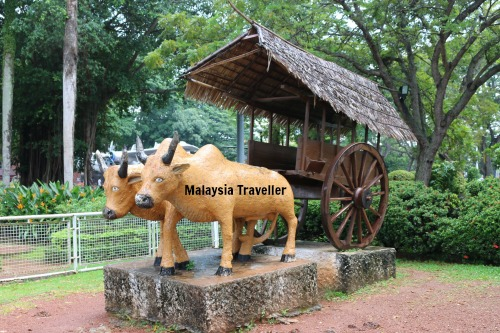
A replica bullock cart (pulled by a pair of concrete bullocks). When I first visited Melaka in 1980 they still had real bullock carts, albeit mainly used for giving rides to tourists.
- Lang Rajawali
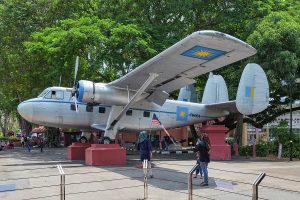
A propeller powered Scottish Aviation Twin Pioneer CC Mk 1 aircraft named ‘Lang Rajawali’ said to be the first aircraft obtained by the newly formed Royal Malayan Airforce in January 1962.
- Diesel Locomotive
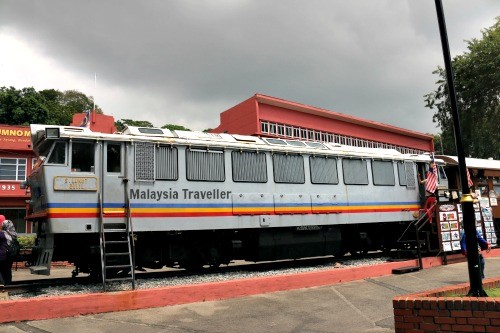
A decommissioned diesel locomotive named Sungai Lukut 21111 (built in Japan in 1965) together with an attached vintage railway carriage which is now used as a souvenir shop.
- Melaka submarine museum
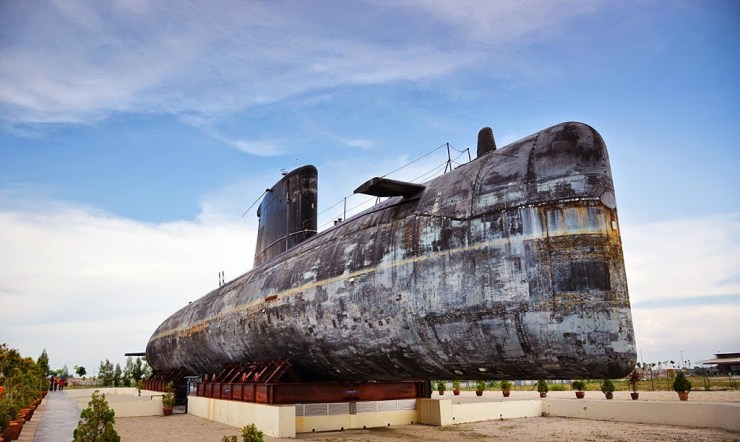 At the Melaka Submarine Museum, visitors get the chance to see a submarine up close and to go inside and witness the living and working conditions of submariners.
There is only one submarine here, the SMD Ouessant, an Agosta 70 class submarine which was built in 1978 by Arsenal de Cherbourg in France. It was decommissioned by the French Navy in 2001 and subsequently transferred to the Royal Malaysian Navy where it was used as training vessel from 2005 – 2009. It is an electric/diesel powered non-nuclear submarine. Similar submarines have been used by the Spanish and Pakistani navies.
Now the submarine is propped up on steel supports on dry land and is open to the public as a museum.
- Melaka maritime museum
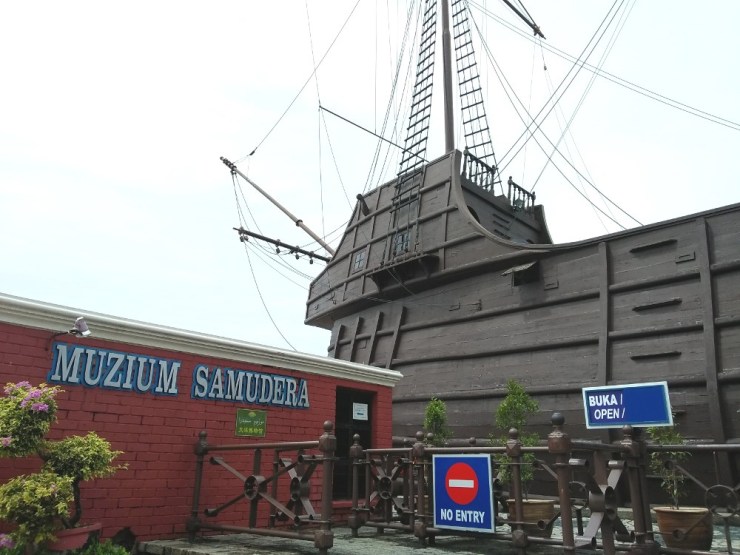
One of Melaka’s most iconic sites is the half-sized replica of the Portuguese galley, the Flor de la Mar, which is set near the mouth of Melaka River. The original was said to have sunk in the Strait of Melaka on its way back to Portugal, and with it the vast treasures it was carrying.
The structure houses the Melaka Maritime Museum, which tells the city’s long history as an international trade hub.
 The Amazing Of Malacca